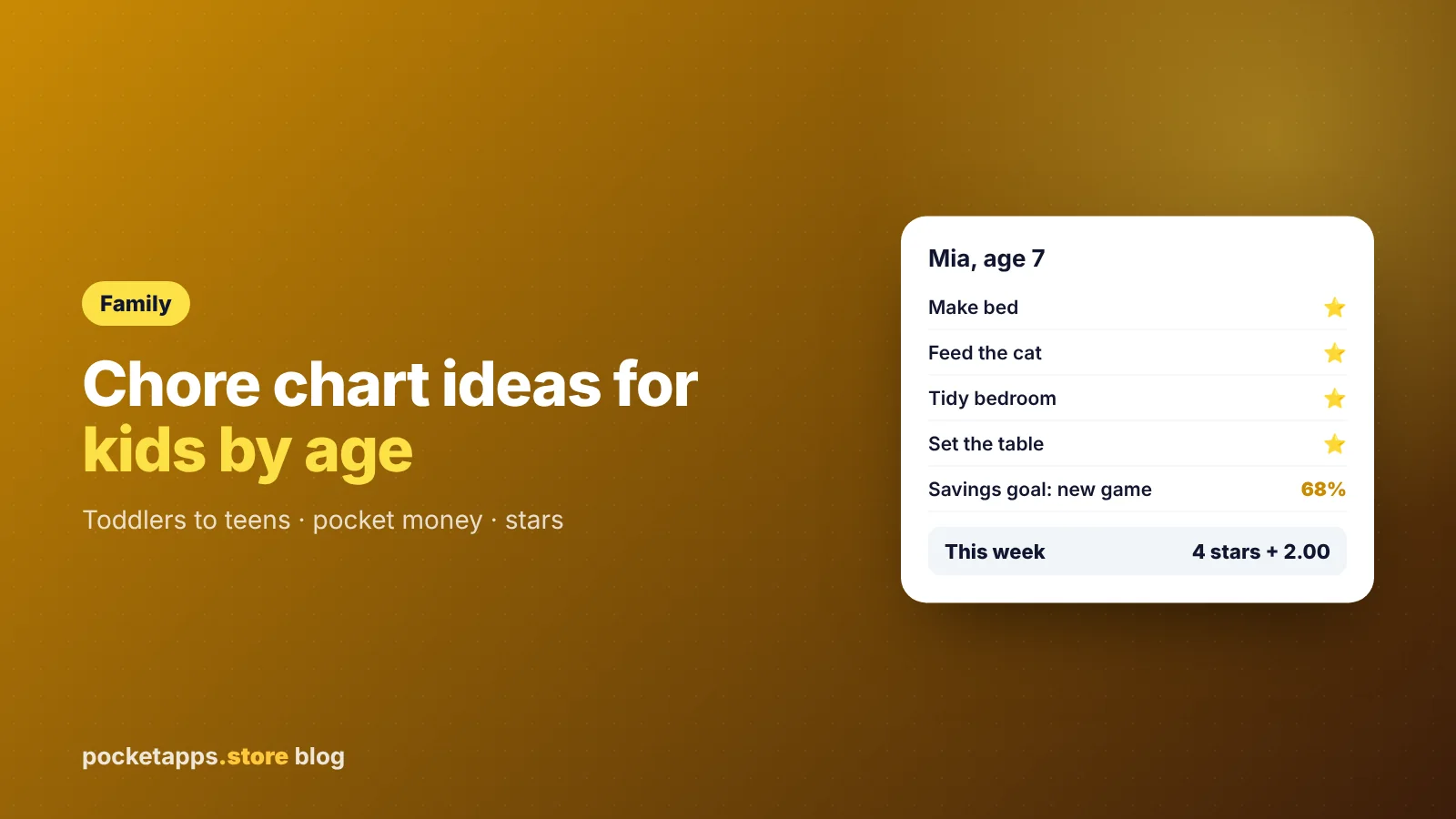
Children can do more than we often expect – and helping at home teaches responsibility, confidence and teamwork. The trick is giving them jobs that match their age, and making the system simple enough that it actually lasts longer than a week. Here are practical chore chart ideas for kids by age, from toddlers to teenagers, plus how to set up a chore chart for kids that works and whether to link chores to pocket money.
Why chores are good for children
- Responsibility: they learn that a home runs because everyone helps.
- Life skills: cooking, cleaning and laundry are skills every adult needs.
- Confidence: finishing a real job feels good.
- Teamwork: chores show that everyone in a family contributes.
Start small and praise effort, not perfection. A slightly wonky bed made by a five-year-old is a success.
Age-appropriate chores: a simple guide
Every child is different, so treat these as ideas rather than rules.
Ages 2–3
- Put toys in a box.
- Put dirty clothes in the laundry basket.
- Help feed a pet (with a grown-up).
- Wipe up small spills with a cloth.
Ages 4–5
- Make their bed (it doesn't need to be perfect).
- Set and clear their own place at the table.
- Match socks from the clean washing.
- Water plants with a small watering can.
Ages 6–8
- Tidy their bedroom.
- Put away clean clothes.
- Help unload the dishwasher (no sharp knives).
- Sort recycling.
- Help prepare simple food, like washing vegetables.
Ages 9–11
- Vacuum a room.
- Take out the bins.
- Make a simple breakfast or packed lunch.
- Fold and put away washing.
- Clean the bathroom sink.
Ages 12 and over
- Do a full load of laundry.
- Cook a simple family meal once a week.
- Clean the bathroom.
- Mow the lawn or help in the garden.
- Look after younger siblings for short periods.
How to set up a chore chart for kids that works
- Pick 3–5 chores per child. Too many feels like a punishment.
- Choose the days. Some jobs are daily (making the bed), others weekly (tidying the bedroom).
- Show it clearly – on the fridge, a tablet or a phone – with pictures for younger children.
- Let children tick off their own jobs. It gives them ownership.
- Check before it counts. A quick "well done, let's look" keeps standards fair.
- Review every month. Swap chores, add harder ones as they grow and drop the ones that cause arguments.
Should you pay pocket money for chores?
Families do this in different ways, and there's no single right answer:
- Pocket money for chores: children earn money for each job. It teaches that work earns money, but some children may refuse jobs when they don't need the cash.
- Basic chores unpaid, extra jobs paid: everyday jobs like tidying their room are expected; extra jobs like washing the car earn money. Many parents find this balance works best.
- Stars or points instead of money: good for younger children, who can swap stars for a treat, an outing or extra screen time.
Whatever you choose, be consistent. If you agree to pay, pay on time – children notice.
Make saving part of the system
Pocket money is a great way to teach saving. Help your child pick a goal – a toy, a game or a day out – and show their progress as they earn. Seeing a progress bar fill up is surprisingly motivating, and they learn that waiting and saving pays off.
Common chore chart mistakes
- Too many chores at once.
- Re-doing their work in front of them – it tells them their effort didn't count.
- Forgetting to check or pay, so the chart quietly stops.
- Using chores as punishment, which makes them feel negative.
- Different rules for different children without explaining why.
Frequently asked questions
At what age should kids start doing chores?
Many children can start simple tasks, like putting toys away, at around two or three years old, with lots of help and praise.
How many chores should a child have?
Three to five regular chores is plenty for most children. Add more as they grow and become more capable.
How much pocket money should children get for chores?
It depends on your family budget and where you live. Many families set a small weekly amount and add a little extra for bigger jobs.
How do I stop children arguing about chores?
Make jobs clear, rotate the less popular ones and let a grown-up approve finished jobs, so nobody can claim a job they didn't do.
Turn chores into a game with Jis Chore
Jis Chore gives every child their own chore chart, with jobs on chosen days worth pocket money or stars. Children tick off their own jobs on a family tablet or a parent's phone, and a grown-up approves them before they count – a parent PIN stops children approving their own jobs or changing amounts. Each child has a balance and a savings goal with a progress bar, and you can pay out or add a bonus in one tap.
It works offline and syncs between parents' phones. Jis Chore is included in the pocketapps.store membership, with a 7-day free trial and no card needed.